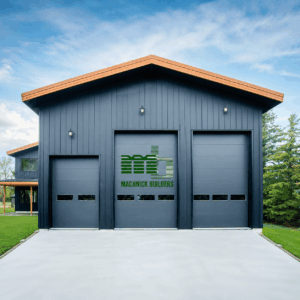
A guide from Machnick Builders
If you’ve searched “steel buildings near me,” you’re probably weighing a big decision: garage, workshop, barn, warehouse, or commercial facility, and you want a builder who actually works in your area — not a national broker who ships a kit and disappears. Here’s what to know about steel building construction in the Capital Region, and why choosing a local, experienced builder matters as much as the steel itself.
Why Steel Buildings Have Become the Go-To Choice
Steel buildings — often called pre-engineered metal buildings (PEMBs) or cold-formed steel structures — have moved well beyond their industrial-only reputation. Today they’re used for:
- Residential garages and workshops — space for vehicles, tools, and hobbies without the maintenance headaches of wood-frame construction
- Agricultural buildings — barns, equipment storage, and livestock housing built to handle heavy loads and harsh weather
- Commercial warehouses and distribution centers — clear-span interiors that maximize usable floor space
- Retail and office buildings — increasingly finished out with brick, stone, or glass facades so the steel structure is invisible from the curb
- Self-storage facilities — modular, expandable designs that scale with demand
The appeal comes down to a few consistent advantages: steel buildings generally cost less per square foot than comparable wood-frame construction, go up faster, and require far less long-term maintenance since steel doesn’t rot, warp, or attract termites.
Why Steel Performs So Well in Upstate New York
Anyone building in the Capital Region has to plan around real winters — heavy snow loads, ice, and temperature swings that stress a structure over decades. Steel has some clear advantages here:
Snow load capacity. Pre-engineered steel frames are designed and stamped to meet specific load requirements, including the heavier snow loads our region sees compared to much of the country.
No rot, no warping. Wood-frame structures are vulnerable to moisture damage over time. Steel doesn’t absorb water, so it won’t swell, crack, or rot through repeated freeze-thaw cycles.
Fire resistance. Steel doesn’t burn, which matters for insurance rates as much as safety — many insurers offer lower premiums for steel-frame structures.
Pest resistance. No termites, no carpenter ants, no structural damage from wood-boring insects.
Longevity. A properly built and maintained steel structure can last 50+ years with minimal upkeep.
Why “Near Me” Matters When Choosing a Steel Building Contractor
A steel building is only as good as the foundation, framing, and finishing work around it — and that’s where local experience makes the difference between a building that performs for decades and one that runs into problems.
Local code knowledge. Building codes, snow load requirements, and permitting processes vary by municipality. A contractor who regularly pulls permits in your town already knows what your local building department expects.
Site-specific engineering. Soil conditions, drainage, and frost depth all affect foundation design. A local builder has seen your area’s ground conditions before and designs accordingly.
Faster response during construction. Weather delays, inspection scheduling, and site visits all go smoother with a builder who isn’t driving in from out of state.
Accountability after the build. A local, established builder has a reputation in the community to protect — and is still around if you have a question five years down the road.
What Goes Into a Steel Building Project
A steel building isn’t just steel — it’s a full construction project with several stages:
- Site evaluation and design — assessing your lot, intended use, and local code requirements to determine the right building size, layout, and engineering specs
- Foundation work — concrete slab or footings sized to the building’s load requirements and your soil conditions
- Steel frame erection — the pre-engineered frame components are assembled on-site
- Exterior finishing — metal panel siding, or increasingly, brick, stone, or traditional siding applied over the steel frame for a fully custom look
- Interior build-out — insulation, electrical, plumbing, and finishing work depending on the building’s intended use
- Final inspections — coordinating with local building officials to close out permits
A general contractor experienced in steel construction manages all of these stages, rather than leaving you to coordinate a kit supplier, a foundation crew, and a finishing contractor separately.
Choosing the Right Steel Building Contractor
When comparing builders, look for:
- Experience specifically with steel and pre-engineered buildings, not just general contracting
- In-house or closely managed foundation, framing, and finishing crews rather than a patchwork of subcontractors
- A portfolio of completed local projects you can see or visit
- Clear, itemized pricing that accounts for site work, permits, and finishing — not just the steel package price
- Familiarity with local building departments across the towns and counties you’re building in
Build Your Steel Building with a Local Capital Region Team
Whether you’re planning a residential garage, an agricultural building, or a commercial facility, the value of a steel building depends on the team putting it up. Machnick Builders brings local construction experience to every stage of a steel building project — from site work and foundation through framing and finishing — so you get a structure engineered for our winters and built to last.
Ready to talk through your steel building project? Contact Machnick Builders today for a consultation.